Process and Technology
Our solutions
Plastic waste to Olefins
Plastic waste to BTX and Methanol
Plastic waste to Naphtha
Polystyrene waste to Styrene
Renewable Fuels and Energy
Plastic waste to Olefins
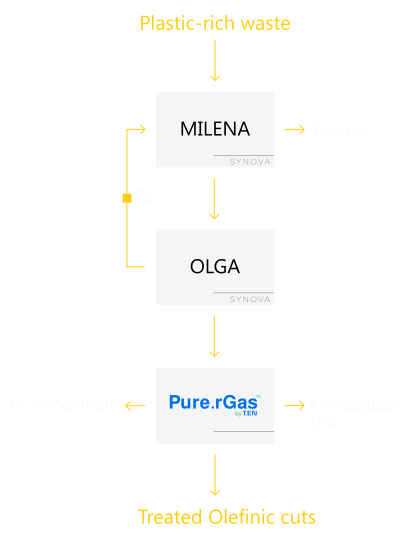
The waste to olefins process converts plastic-rich waste into olefins and aromatics. The solid waste feedstock is cracked in MILENA. Subsequent units clean the gas and produce the target components for use in existing downstream processes in the chemical industry. SYNOVA works with Technip Energies as technology partner. SYNOVA and Technip Energies work with several clients on the realization of a first commercial plant.



Plastic waste to BTX and Methanol
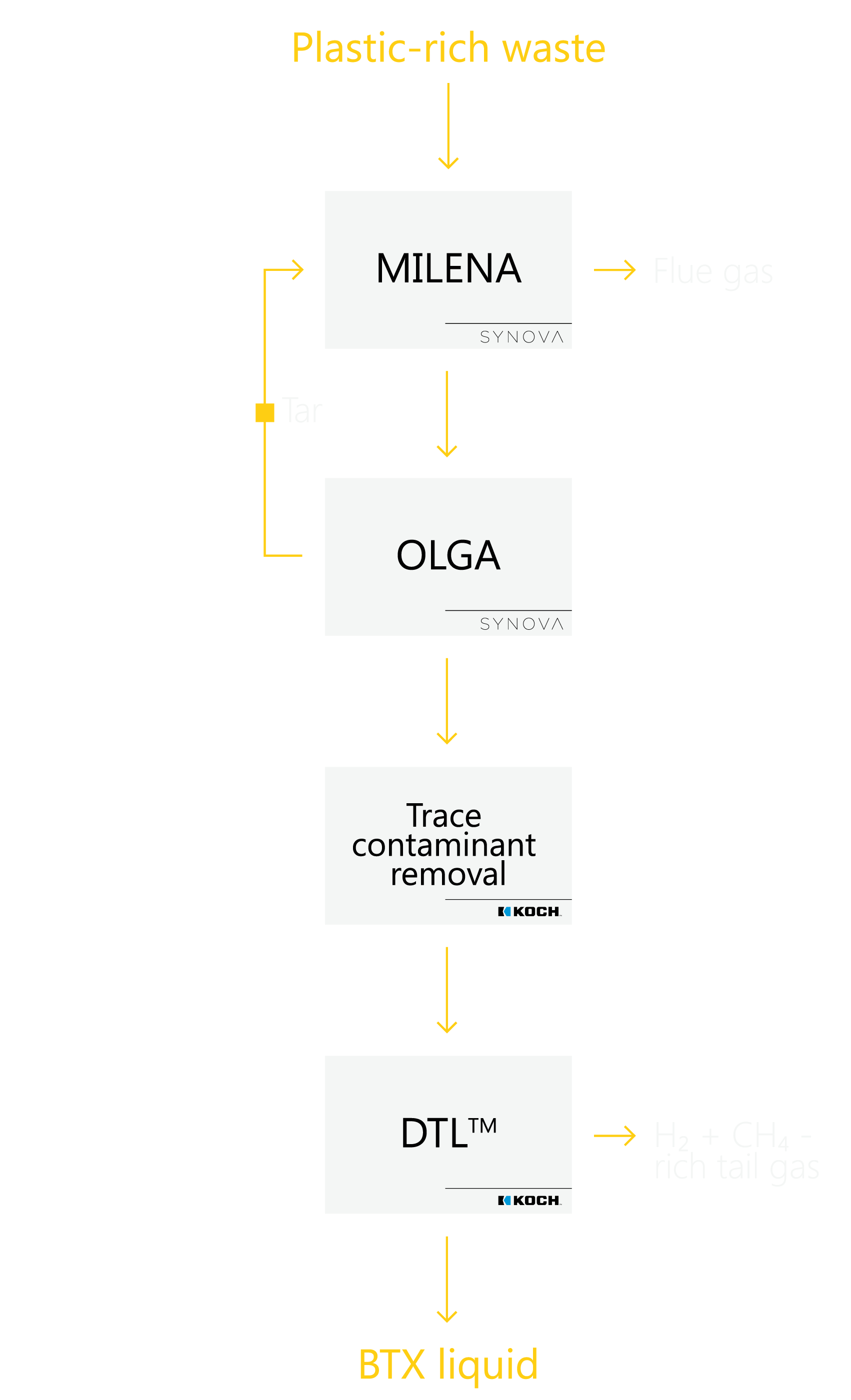
Waste that is rich in plastics is converted in MILENA to a raw gas that is subsequently cleaned and further converted to BTX liquid. Our technology partner is Koch Technology Solutions (KTS). As a co-product, a hydrogen enriched natural gas is produced that could be used to replace natural gas, reducing CO2-emissions, but can also be converted to pure hydrogen or methanol.

Plastic waste to Naphtha
The waste to naphtha process converts plastic-rich waste into a naphtha alternative that can be further processed in existing naphtha crackers to enable the plastic circular economy. The solid waste feedstock is cracked in MILENA, but at lower temperatures when compared to the waste to olefins solution. A subsequent condensation unit produces an oil product suitable for upgrade in existing pyoil-upgrading facilities to produce the naphtha alternative.
Polystyrene waste to Styrene
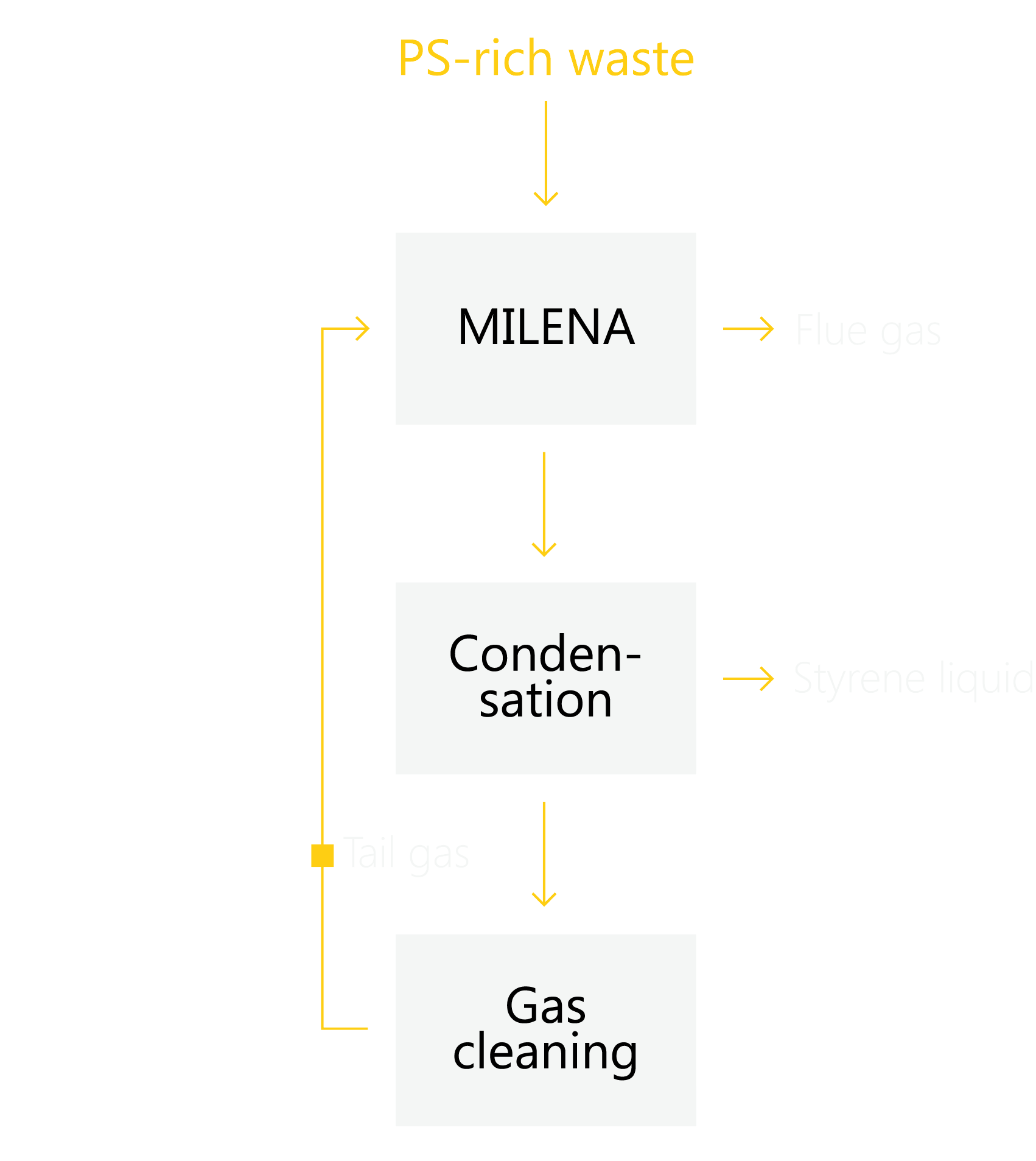
MILENA converts waste that is rich in polystyrene to a condensable liquid that is upgraded to styrene monomer. The front end engineering design for a first commercial plant has been completed.